Tournaments
Our Tournaments
Tournament Goals
- To bring science to life, to show how science works, to emphasize problem solving aspects of
science and the understanding of science concepts. - To develop teamwork and cooperative learning strategies among pupils/students.
- To make science education more exciting so more students will enroll in science courses and engage in other science activities like science reading, fairs, meetings and field trips.
- To promote high levels of achievement and a commitment to excellence, to demonstrate that Nigerian students can perform at levels that surpasses expectations of even practicing scientists and engineers.
- To attract more pupils/students particularly females to professional and technical careers in science, technology and science teaching.
Divisions/Grades/Team Limits
Currently, there are three Science Olympiad Divisions:
- Division A (Grades /Basic/Pry 4-6)
- Division B (JSS 1-3)
- Division C (SSS 1-3)
NOTE: Pupils/Students on the team must be from the participating school as defined and authenticated by the administration of the school.. Any pupil/student can compete at only one Division level
(either Division A or B, not both) at a single school.
How Science Olympiad Tournaments are organized
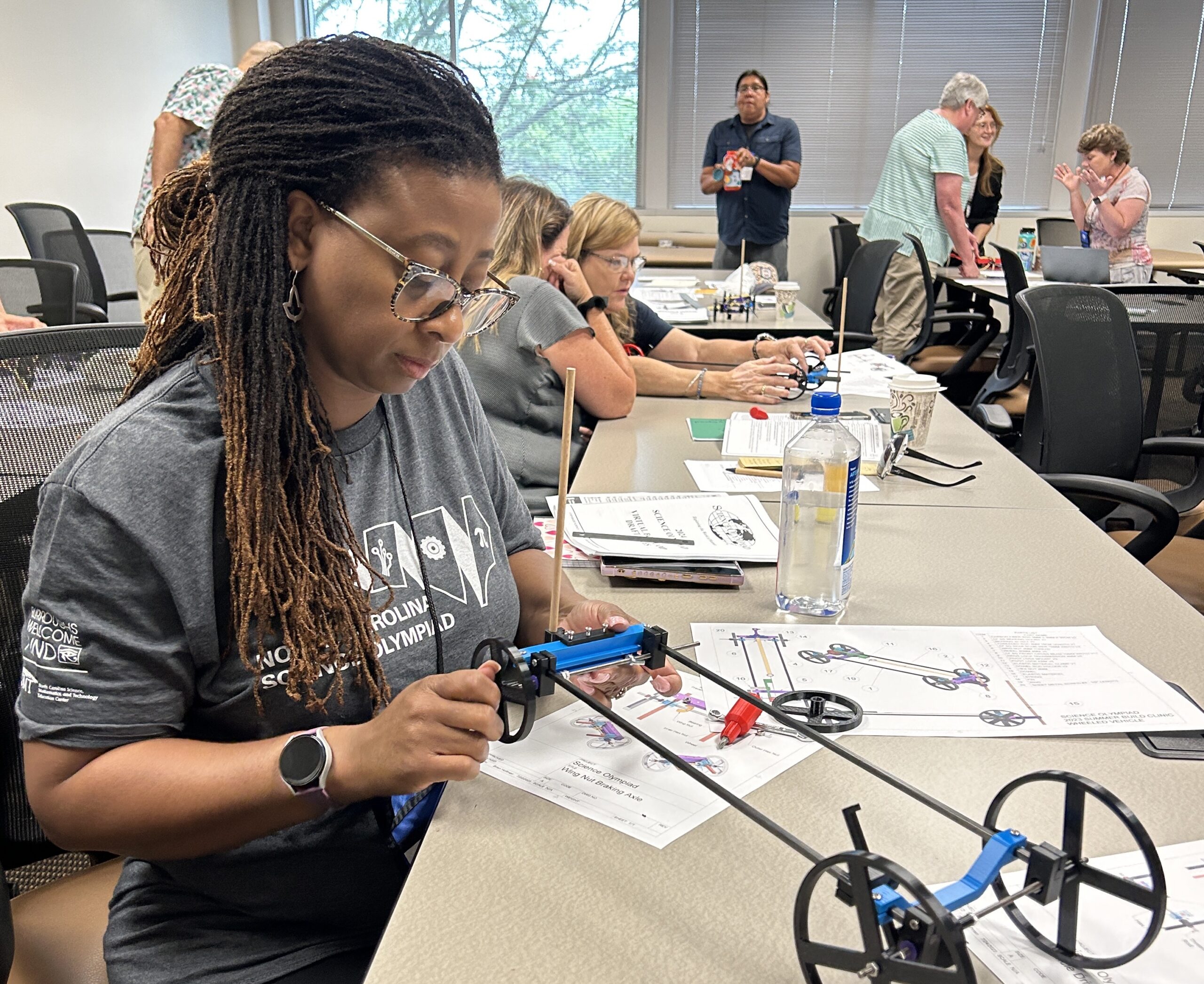
Science Olympiad comes in many shapes and sizes to fit your needs. At the primary school (basic) level, try an Elementary Science Olympiad (ESO) program, which can come in the form of a competitive tournament, a hands-on science Fun Day or an expert-filled Science Olympiad Fun Night.
In the primary and secondary classes, grades, Science Olympiad functions much like a football or soccer team, requiring preparation, commitment, coaching and practice throughout the year.
Each school-based team is allowed to bring 12pupils/ students who cross-train for a variety of events in their skill set, but some school clubs (participating schools) that engages Science Olympiad events, allow for an apprentice and mentoring system.
Science Olympiad competitions are like academic track meets, consisting of a series of nearly 50 team events in both Division A is (Primary school); and Division B is Junior Secondary school). Each year, a portion of the events are rotated to reflect the ever-changing nature of genetics, earth science, chemistry, anatomy, physics, geology, mechanical engineering and technology. By combining events from all disciplines, Science Olympiad encourages a wide cross-section of students to get involved. Emphasis is placed on active, hands-on group participation.
Through Science Olympiad, students, teachers, parents, principals, administrators, proprietors and business leaders bond together and work toward a shared goal. Teamwork is a required skill in most scientific careers today, and Science Olympiad encourages group learning by designing events that forge alliances. In Elevated Bridge, an engineering whiz and a kid from wood shop can become gold medalists. Similarly, a talented builder and a student with a good science vocabulary can excel in Write It Do It, one of Science Olympiad's most popular events.
The culmination of local government level, and State tournaments is the Science Olympiad National Tournament, held at a different university each year. This rotating system gives students the opportunity to visit new parts of the country and tour tertiary institutions (colleges, polytechnics, universities) they might consider for their undergraduate studies, and provides a memorable experience that lasts a lifetime.
Future National Tournaments
The Science Olympiad National Tournament is the pinnacle of local government and regional tournaments each academic year. Teams from each region compete head-to-head for a chance to compete against some of the brightest and most creative /pupils/students in the United Kingdom at the National Tournament. Each year, qualified teams are put to the test, launching Helicopters and Hot Air Balloons, building in Trajectory and Junkyard Challenge, matching wits in Compute This, Write It/Do It and Physical Science Lab. , and solving world health pandemics in Disease Detectives. This blend of engineering, knowledge, problem solving, technology and process skills makes Science Olympiad unique in the world of science competitions.
Pupils/Students on Science Olympiad teams develop a sense of teamwork and collaborative
reward similar to the work, sweat and dedication required of an athletic team. Maybe that’s why so many Science Olympiad competitors go on to such successful careers, and tell us that they
learned more in Science Olympiad than anywhere else. They also say that their experience at Science Olympiad National Tournaments was the highest point of their school careers, where they built friendships, made memories and gained confidence that would last a lifetime. Not to mention the awards, trophies, scholarships, trips and prizes offered by the host universities and
sponsors.
National Tournament Scoring Policy
At the end of the Science Olympiad National Tournament Awards Ceremony each team’s head coach will be provided one copy of the final scores. Within one hour after the ceremony is completed the head coach may submit compelling evidence of a scoring inconsistency.
If the evidence is verified the appropriate points, medals and trophies will be awarded for that team only. Thinking that your team did better than scores reflect is not considered compelling evidence.
Awards and Prizes - Details Coming Soon!
National Tournament Prize List – Science Olympiad is grateful to our sponsors and partners, who support the achievement of our Science Olympiad competitors by awarding fantastic prizes, scholarships and student and professional development opportunities.
Event supervisors will privately nominate teams based on their participation in each event, so be at your best at all times! You never know who’s watching when you do a good deed, congratulate another team, or help a fellow competitor.